Knowledge

What Is a Flange?

A flange is a mechanical component used to connect pipes, valves, pumps, and other equipment in a piping system. Typically secured with bolts and a gasket, flanges create a reliable, leak-resistant connection while allowing the system to be easily assembled, disassembled, inspected, and maintained.

ASTM A182 · ASME B16.5 · Class 150 / 300 · 1/2"–24"

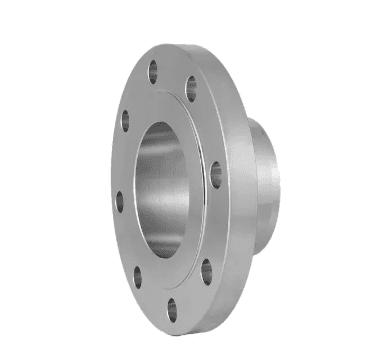
Stainless steel welding neck flange with raised face and bolt circle

304L

316L

Stainless steel flanges in various sizes, pressure classes, and configurations, with custom specifications available.

  • Chemical processing
  • Petrochemical
  • Food and beverage
  • Pharmaceutical
  • Water treatment
  • Industrial piping
  • Liquid cooling

Shop sequence

Forged, then finished to drawing.

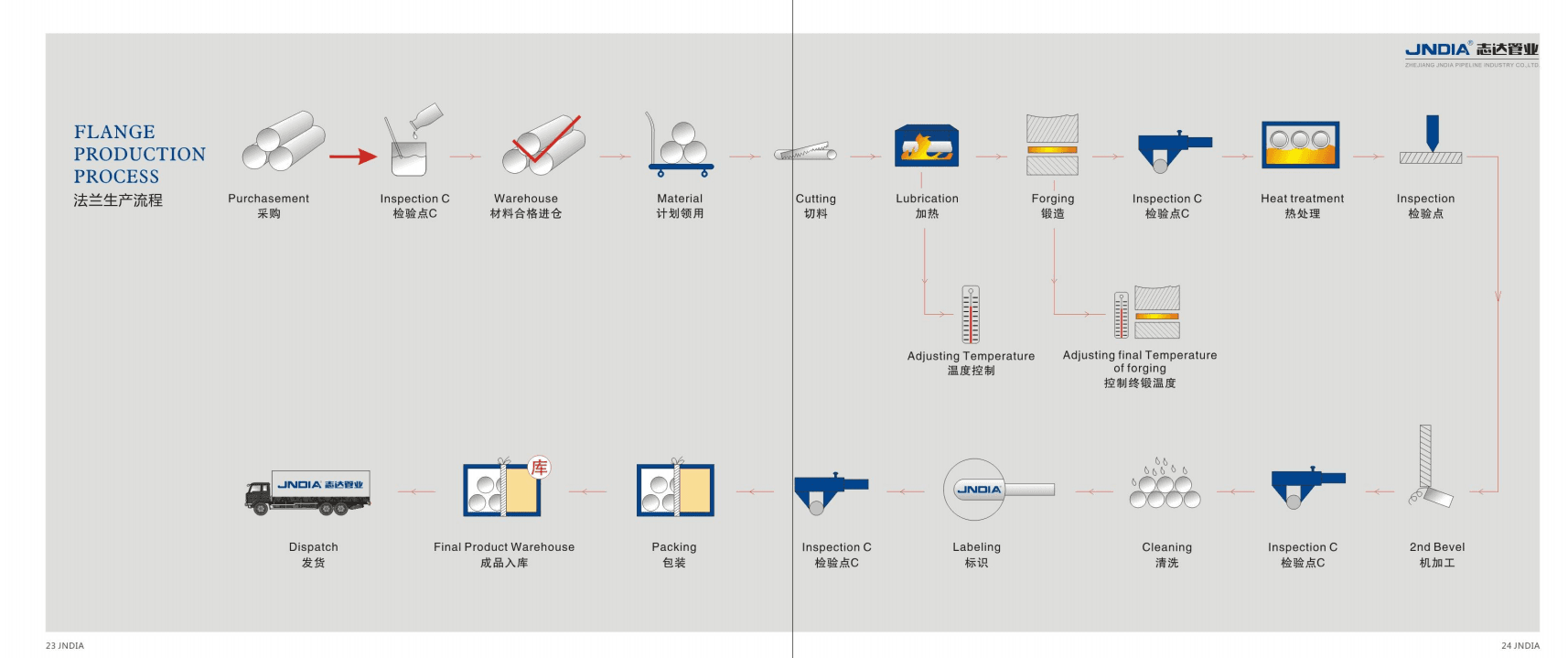
Stainless flange production is a single path: qualify the bar, forge the blank, heat-treat, machine the face and bore, then mark and pack.

  1. 01

    Material

    Purchase, incoming inspection, and qualified bar into stock.

  2. 02

    Forming

    Cut, heat, and forge the blank. Control the finish-forging temperature.

  3. 03

    Heat treat

    Stabilize the structure, then inspect before the blank is machined.

  4. 04

    Machining

    Face, bore, drill bolt holes, and bevel the weld end to drawing.

  5. 05

    Finish

    Clean, mark, final inspect, pack, and dispatch.

JNDIA flange production process flowchart, from material purchase through forging, machining, inspection, and dispatch
Flange production process — incoming bar to dispatch.

Type catalog

Five faces. Five ways to connect.

Each flange type is a different joint. Match the connection to pressure, alignment, and how often the line will be opened.

Stainless steel welding neck flange with tapered hub and raised face

01

Welding Neck

Face / type
WN / RF
Standard
ASME B16.5
Typical service
High pressure, high temperature, and cyclic service.

Butt-welded to the pipe through a tapered hub. The bore matches the pipe, so flow stays smooth and stress is carried into the hub rather than the flange face.
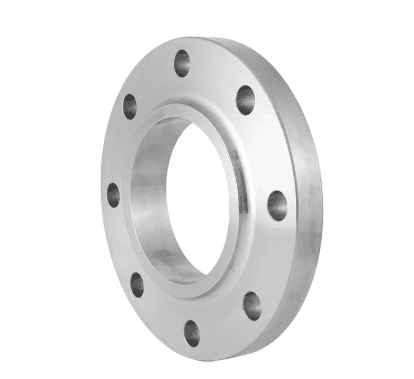
Stainless steel slip-on flange with raised face and bolt circle

02

Slip-On

Face / type
SO / RF
Standard
ASME B16.5
Typical service
Low to moderate pressure where cost and fit-up matter.

The pipe slides into the bore and is fillet-welded inside and out. Alignment is easier, and the hub is shorter than a welding neck.

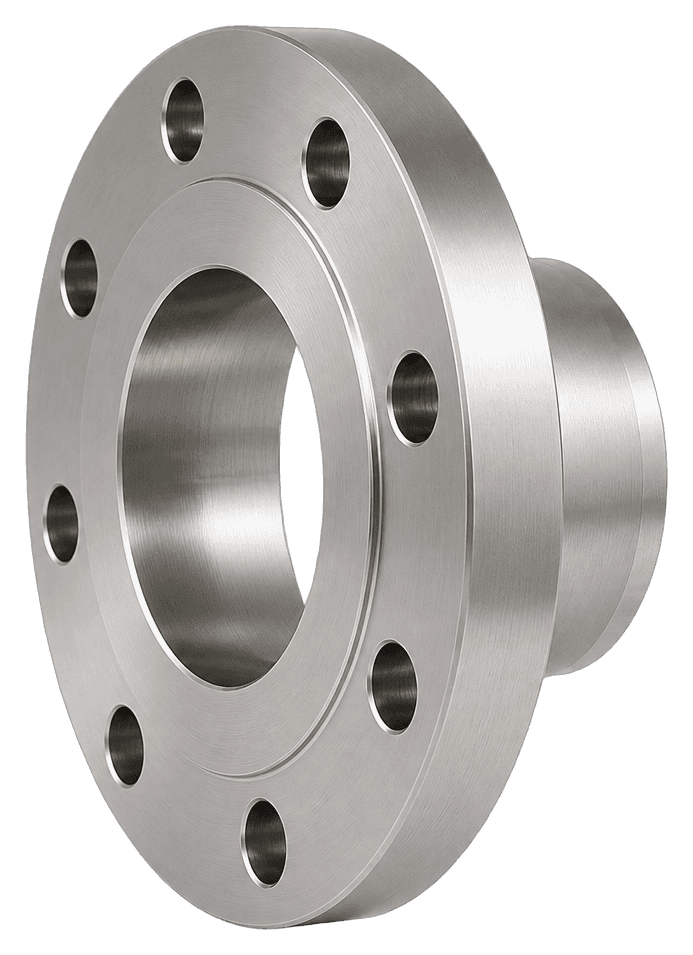
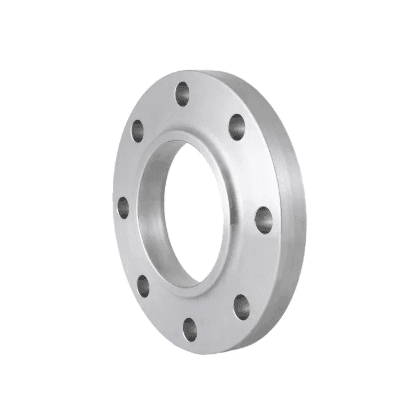
Stainless steel lap joint flange ring used with a stub end

03

Lap Joint

Face / type
LJ
Standard
ASME B16.5
Typical service
Lines that are opened often, or exotic pipe with a carbon-steel ring.

A loose ring sits over a stub end. Bolt holes can rotate for alignment, and the ring can be a different grade from the wetted stub.

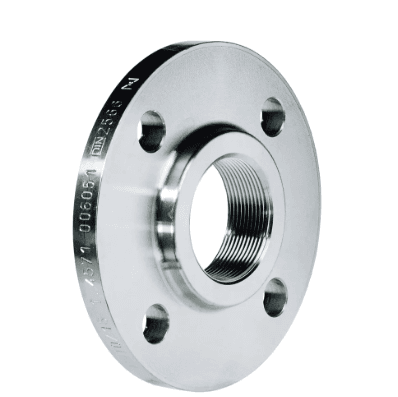
Stainless steel threaded flange with internal pipe thread and raised face

04

Threaded

Face / type
THRD / RF
Standard
ASME B16.5
Typical service
Smaller sizes and lower-pressure utility service.

Screws onto a threaded pipe. No weld is required, so it suits small lines where welding is restricted or impractical.

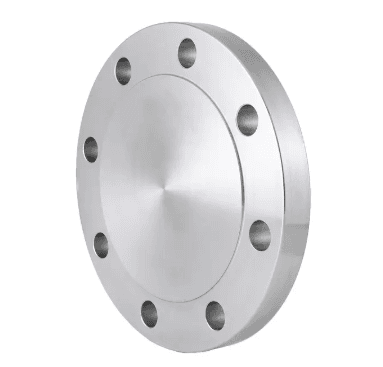
Stainless steel blind flange with raised face and no center bore

05

Blind

Face / type
BL / RF
Standard
ASME B16.5
Typical service
Isolation points, vessel openings, and future tie-ins.

A solid disc with no bore. It closes a line, blanks a nozzle, or holds pressure during hydrotest.